NORTHMARK
Northmark is a behavioural board game designed as part of college project. The challenge was to explore whether game mechanics could help teenagers become more comfortable making decisions under uncertainty. Rather than teaching players the "right" choice, the game creates situations where they must commit with incomplete information, turning hesitation itself into part of the experience.
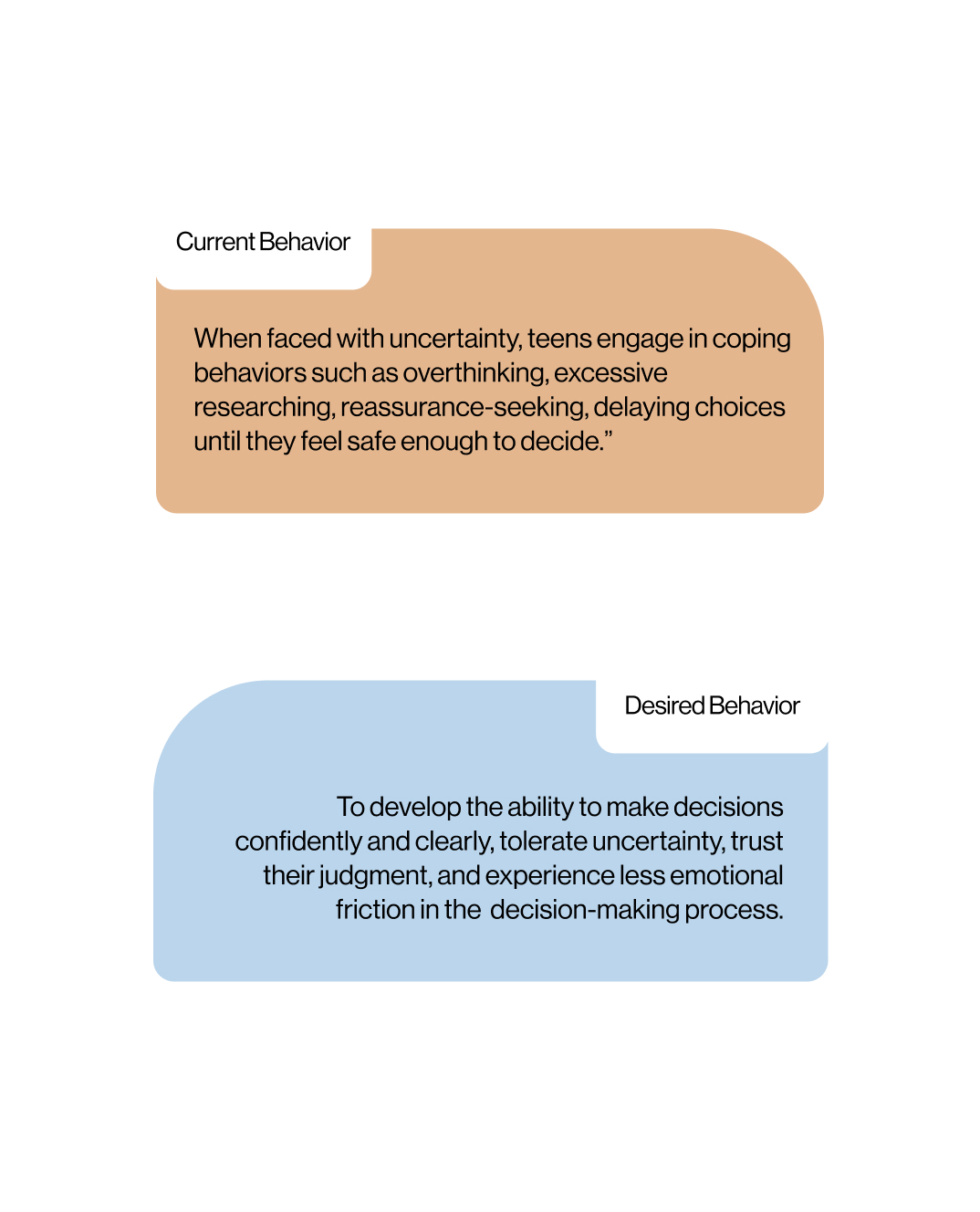
Teenagers increasingly face decisions where the outcome is uncertain, from education and careers to relationships and everyday choices. Yet there are few opportunities to practice making those decisions without real-world consequences.
Thus Northmark. Northmark was designed as a competitive chase game where players must make deliberate choices with even with incomplete information. There are no dice or random movement; every step costs Energy, making risk, hesitation, and commitment part of the gameplay. The goal was to encourage thoughtful action rather than waiting for certainty.
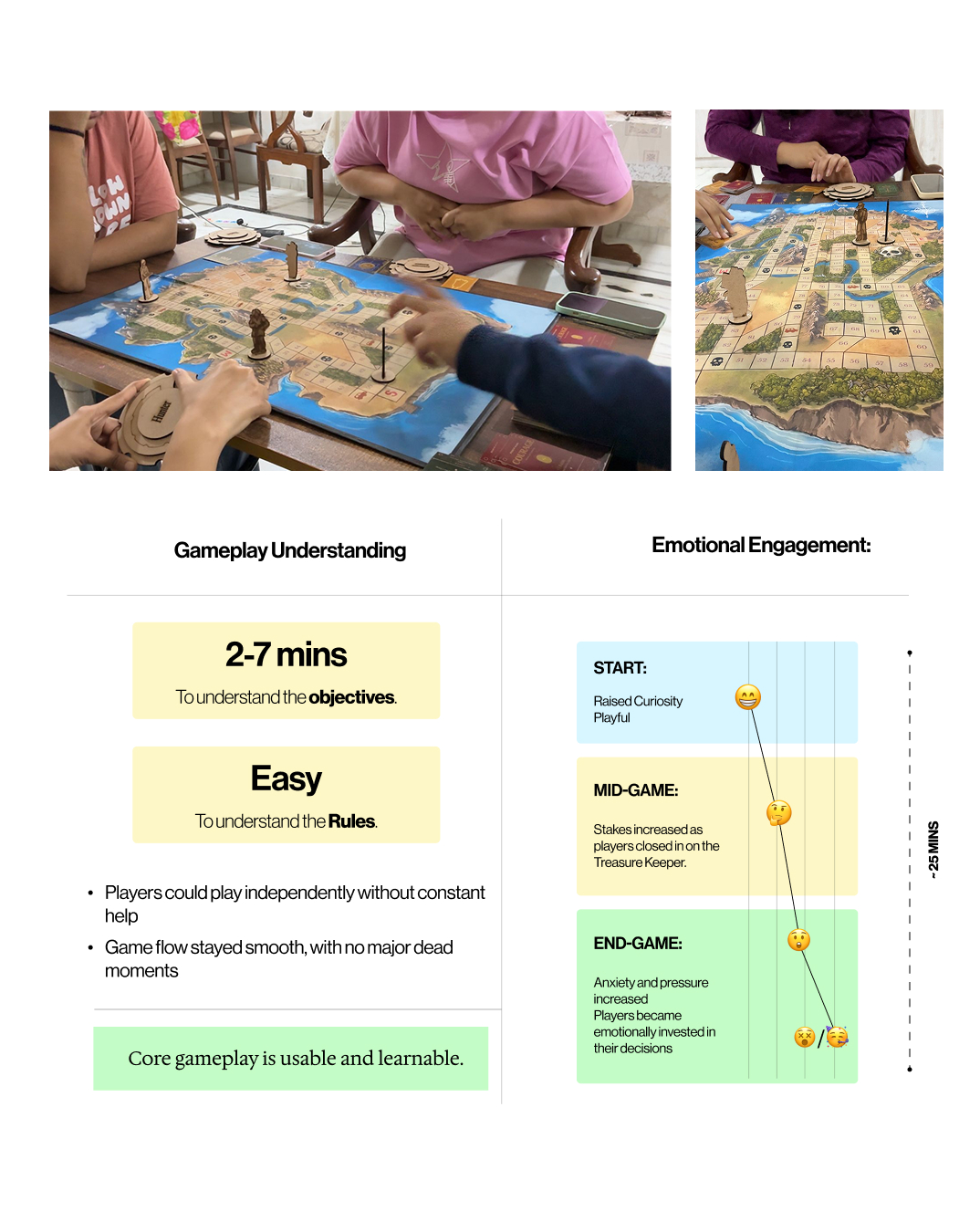
Testing showed that players could quickly understand the rules and play independently. More importantly, the game created moments of hesitation, discussion, risk-taking, and commitment, turning uncertainty into an engaging part of play.
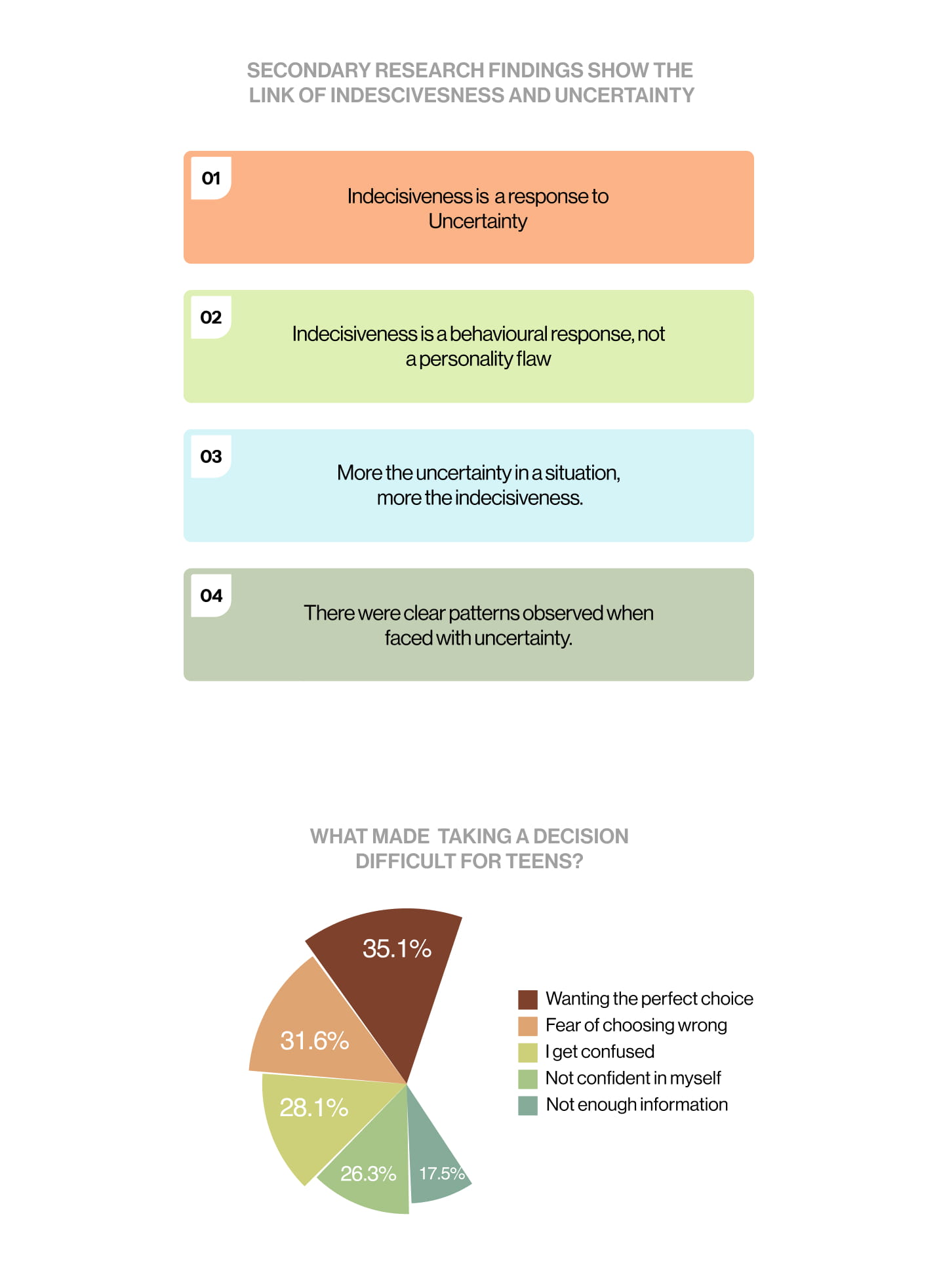
Before designing the game, we studied hesitation. The project began with secondary literature and primary research to understand how teenagers make decisions when outcomes are uncertain. Through research papers, surveys, and interviews, we explored the behaviours that appear between recognising a choice and committing to it. This helped establish the behavioural foundation that later informed every game mechanic.
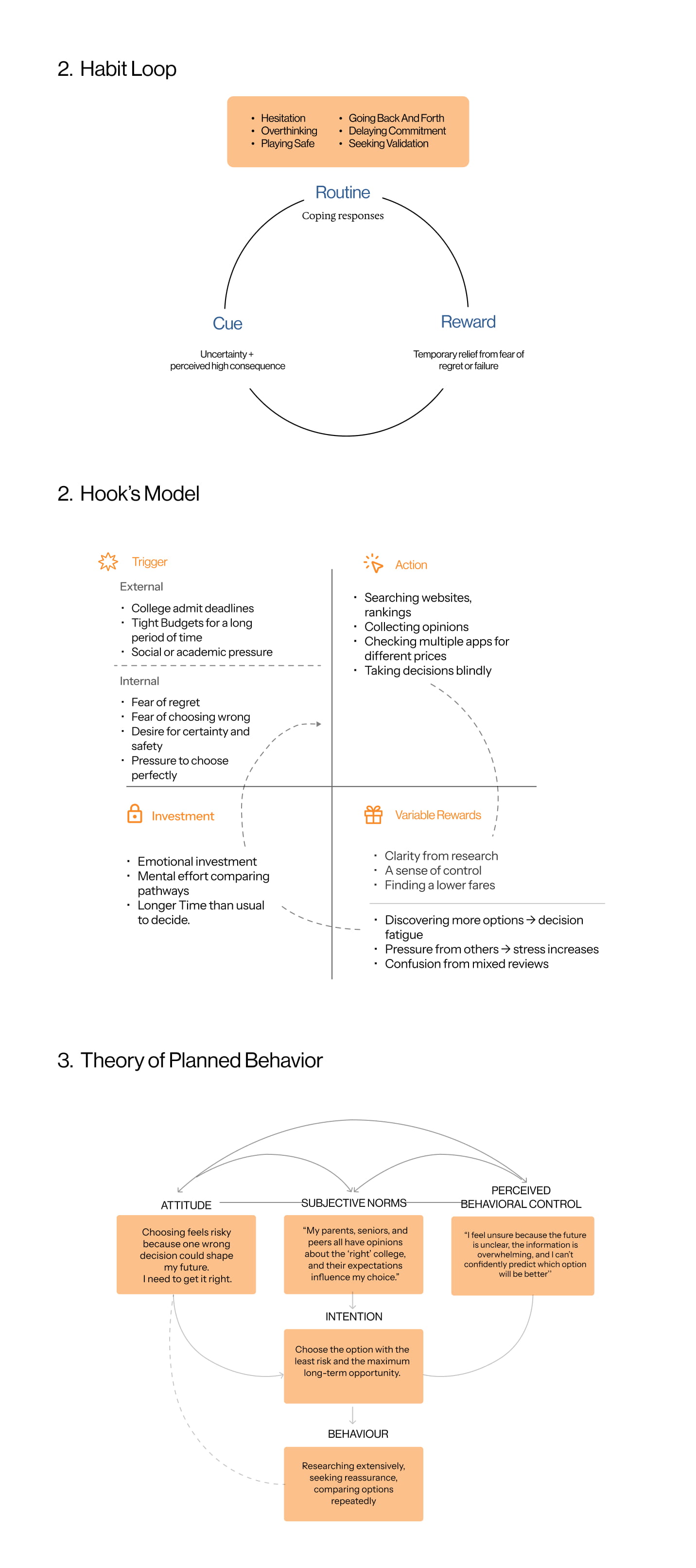
To better understand behavioral patterns, we analysed decision-making using behavioural frameworks including the Habit Loop, Theory of Planned Behaviour, and Fogg's Behaviour Model. These frameworks helped identify where uncertainty disrupted action and how game mechanics could reinforce confidence instead of avoidance.
Instead of beginning with gameplay, we started with behaviour. Each mechanic was designed to reinforce a specific response, like, encouraging commitment, rewarding thoughtful risk-taking, or making hesitation visible. The objective wasn't simply to create an engaging board game, but to ensure every interaction reflected the behavioural outcomes identified during research.
We used low-fidelity prototypes to test the board, player roles, movement, scoring, and currencies. Repeated playtesting helped us refine the system while keeping the mechanics aligned with our behavioural goals.
The mechanics were designed to influence how players approached uncertainty rather than simply how they progressed through the game.
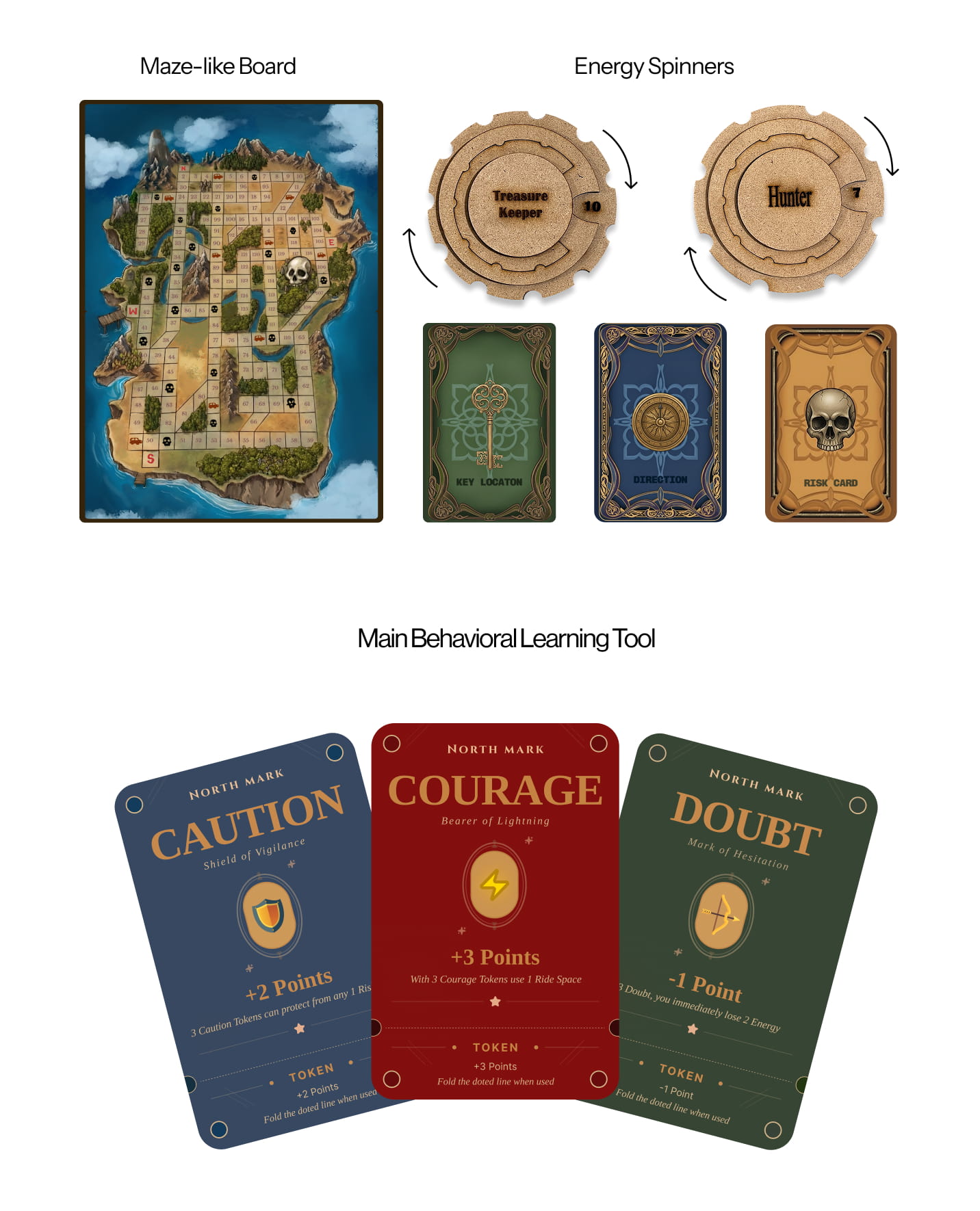
- Maze-like pathways removed obvious choices
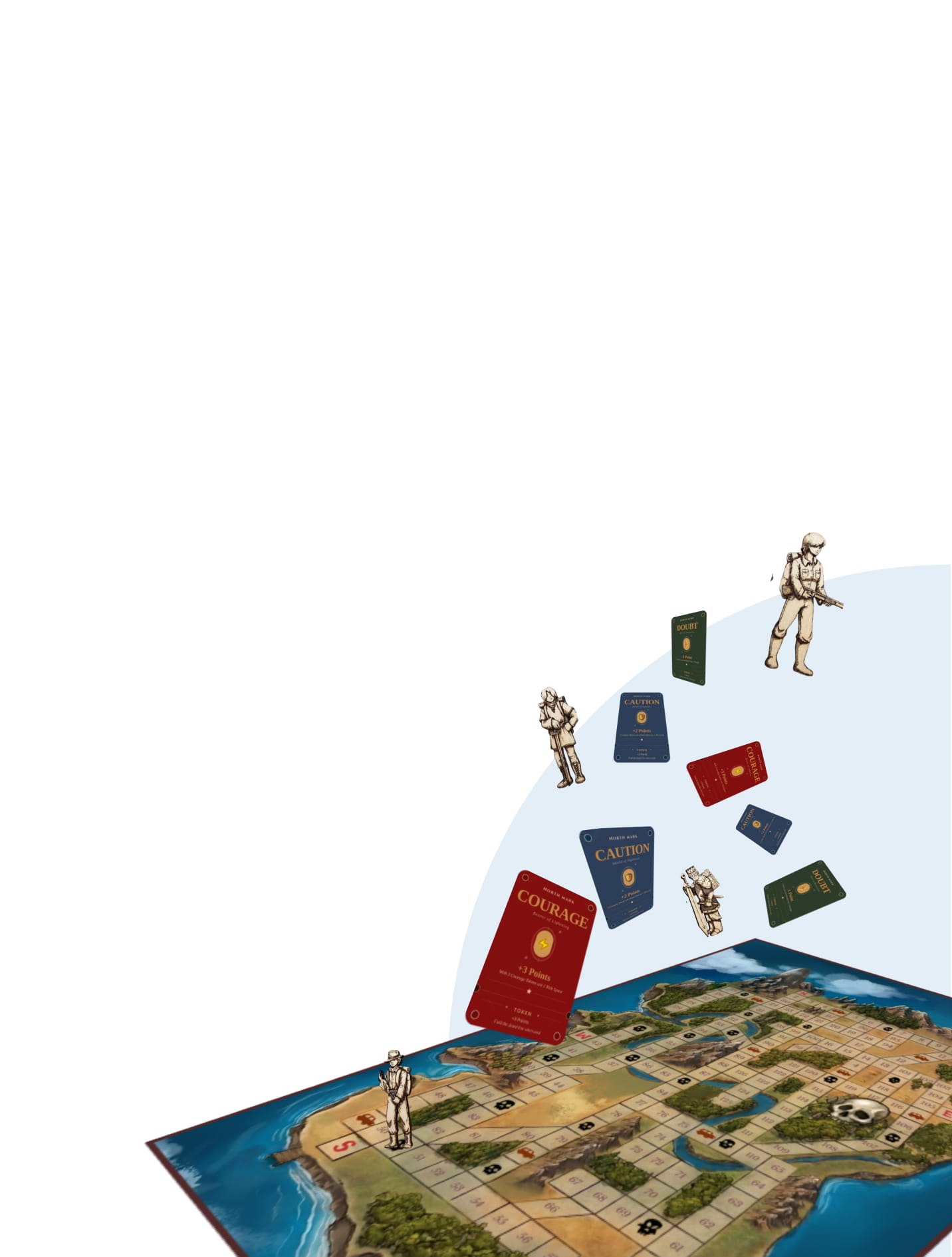
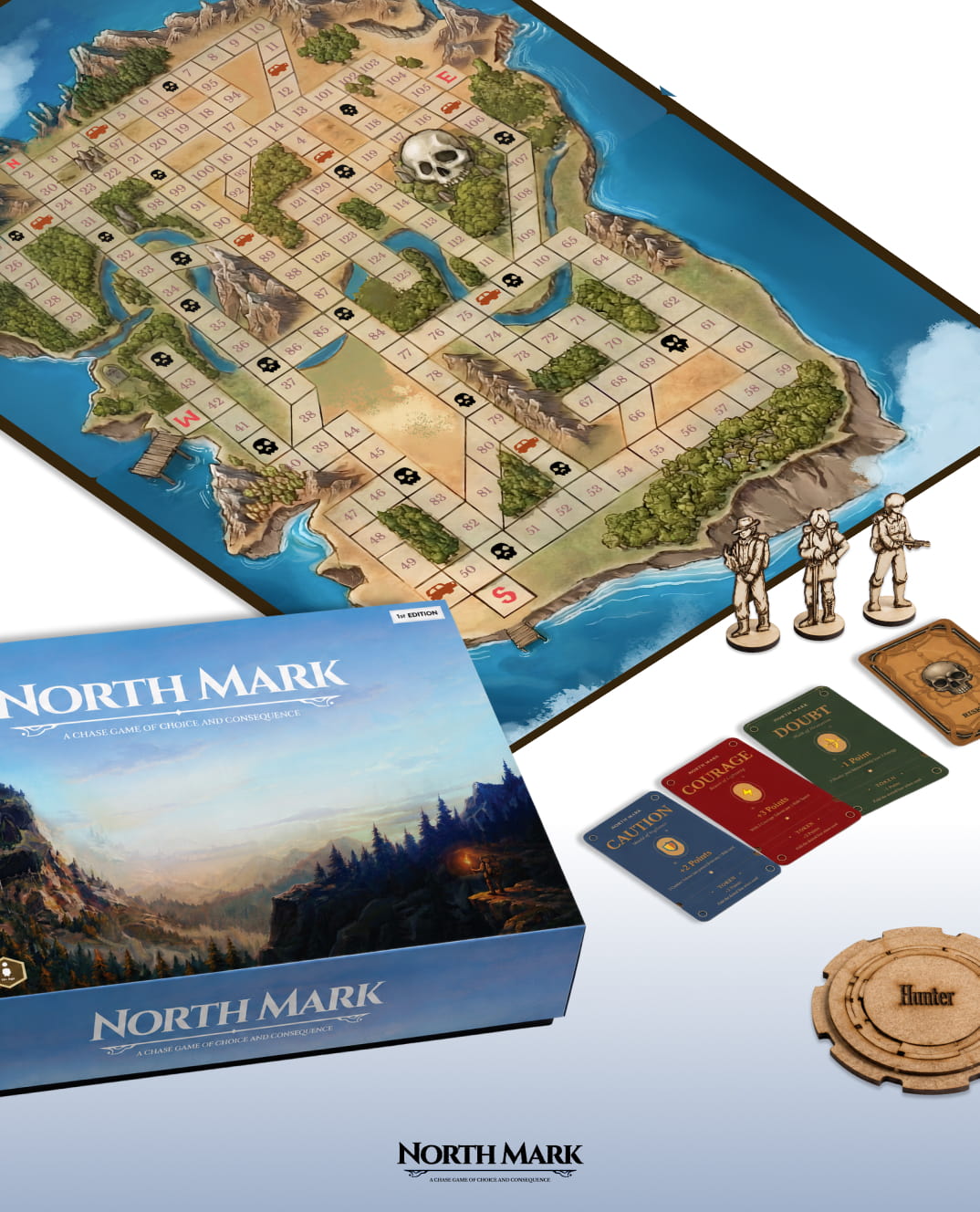
- Risk Spaces encouraged calculated decisions, while Courage, Caution, and Doubt tokens made behavioural patterns tangible throughout play.
- Each system reinforced the central idea that decisions carry consequences, but uncertainty does not always lead to failure.
The challenge was to make Northmark feel like a game first, rather than a psychological self-help tool. I built an adventurous world around the behavioural idea, using an island, treasure, explorers, and danger to make decision-making feel natural within the story.
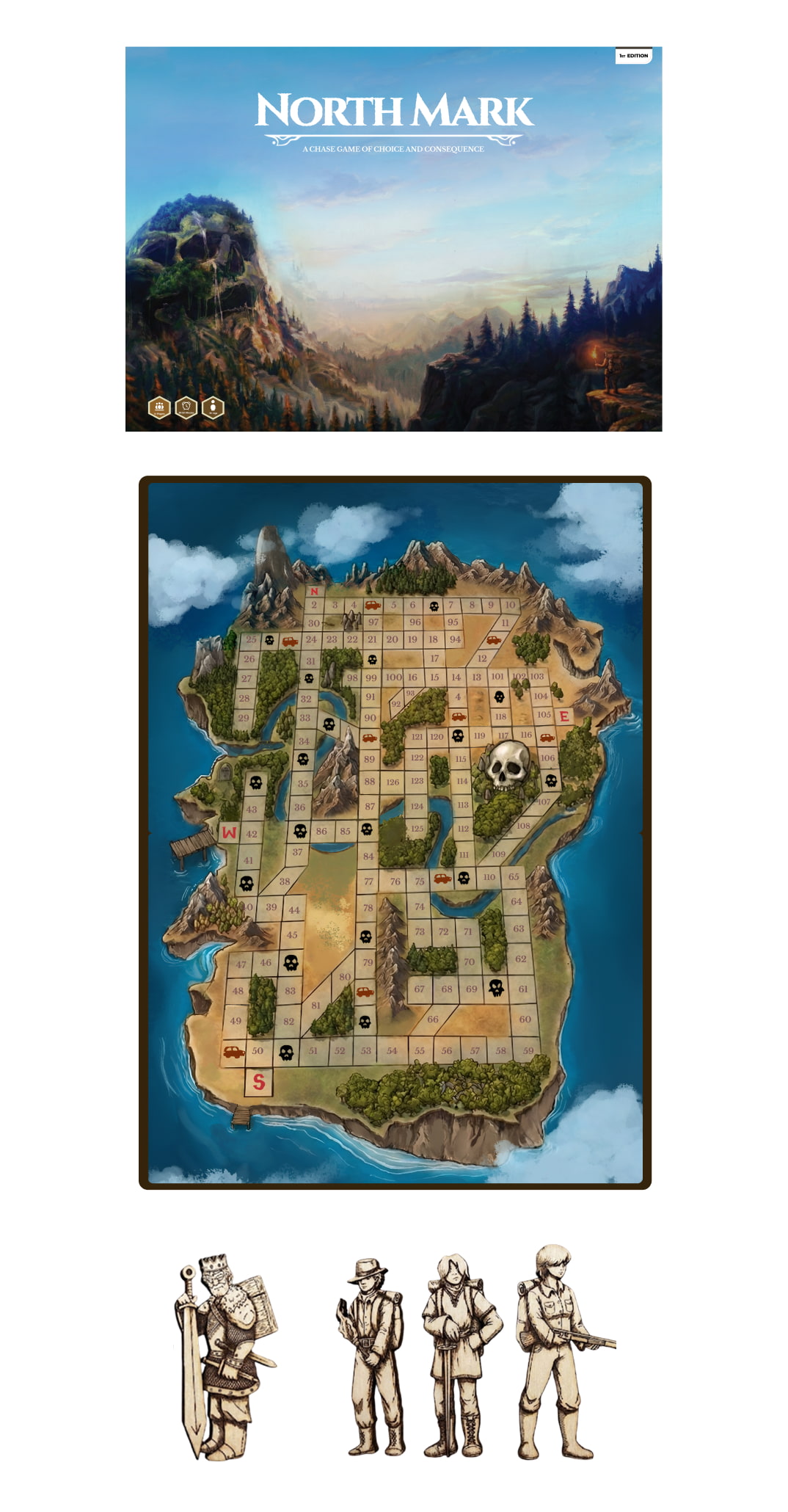
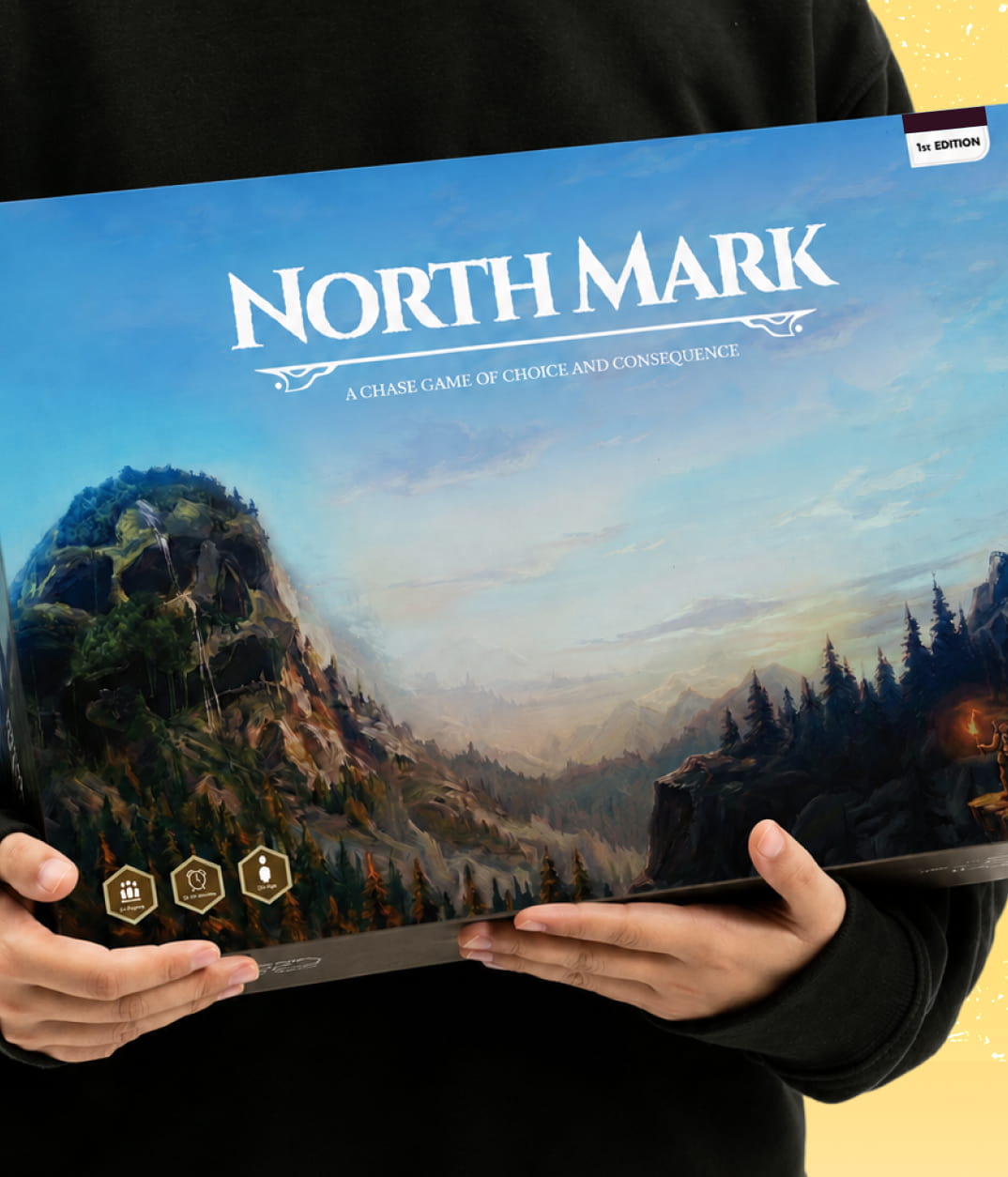
The box introduces Skull Island, where the players are stranded and searching for treasure. The illustrated landscape, maps, and adventurous details establish the world before the game even begins, giving players a reason to explore and take risks.
The board was designed as a maze-like island that players physically move through, with winding paths creating uncertainty while keeping the adventure alive. Explorers and Hunters became the characters within this world, and laser-cut pieces gave them a physical presence, making the game feel like a real expedition rather than a psychological exercise.
In Northmark, one player becomes the Treasure Keeper, running the treasure on Island, while the others become Hunters trying to find it. Hunters must choose their routes, manage their Energy, take risks, and decide when to commit, while the Treasure Keeper tries to keep from being caught. The behavioural idea sits underneath the adventure: players aren't being taught how to make decisions, they are simply put in situations where they have to make them.
This game is symbolic to the goals and desires we have to which we direct our decisions. And catching the treasure keeper is a reflection of the steps we take to achieve the goal.
The final prototype was evaluated to understand whether players could learn the game independently and whether its mechanics produced the intended behavioural responses. Testing showed that players understood the objectives within minutes, while moments of uncertainty naturally led to discussion, hesitation, and eventual commitment. Confidence and Doubt tokens also created visible emotional responses, suggesting that the behavioural feedback was both understandable and engaging.